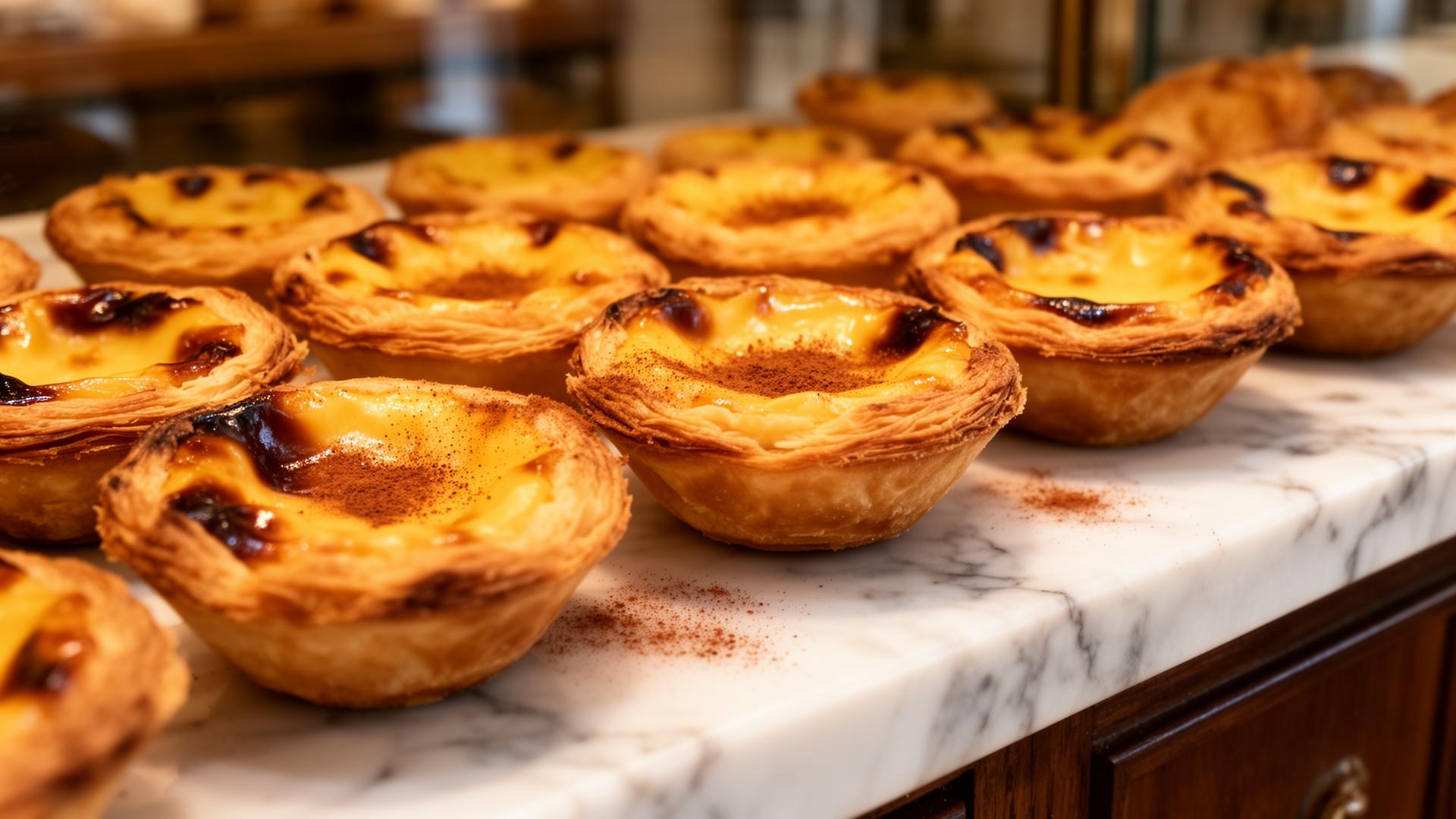
Pastéis de Nata
Flaky pastry, silky custard, a kiss of caramel — the tart that defines a nation.
The Origin
Born in a monastery
The story begins at the Jerónimos Monastery in Belém, where monks used egg whites to starch their robes. Left with mountains of yolks, they did what any sensible person would — they made pastries.
When the monastery closed in 1834 during the Liberal Revolution, the recipe was sold to a sugar refinery nearby. That refinery became Pastéis de Belém, and the original recipe remains a closely guarded secret known to only three master bakers.
Today, pastel de nata has conquered the world — from Macau to London to Tokyo — but nothing compares to eating one fresh from a Lisbon oven, still warm, with a dusting of cinnamon.

Where to Taste
Best Bakeries in Lisbon
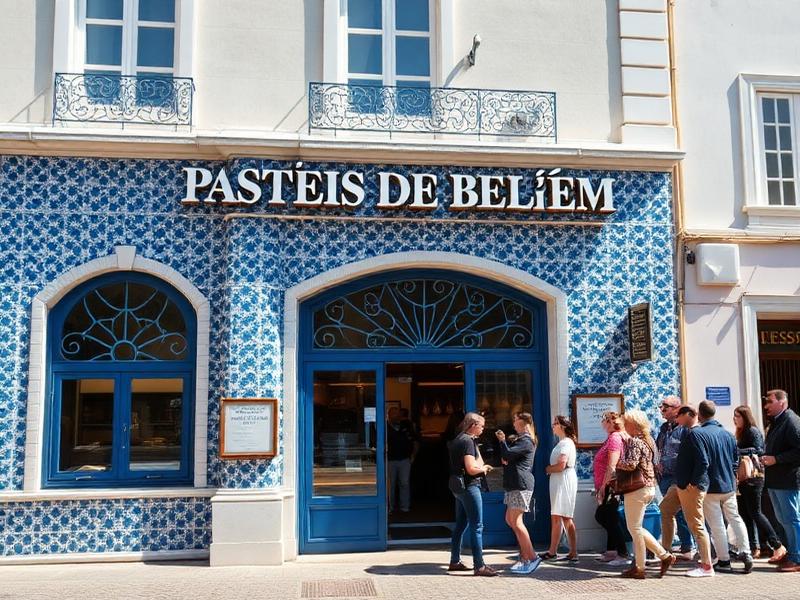
Pastéis de Belém
The original, since 1837. The secret recipe from Jerónimos Monastery is guarded to this day.
Manteigaria
Watch tarts being made through a glass window. Crispy, fresh, and served warm in Chiado.
Aloma
Award-winning pastéis in Campo de Ourique — often called the best in Lisbon by locals.
Nata Lisboa
A modern take on the classic, with multiple locations and consistently perfect pastry.
Pastelaria Batalha
A neighborhood gem near Praça da Figueira, beloved by taxi drivers and office workers.
Fábrica da Nata
Industrial-chic setting near Praça dos Restauradores, with an open kitchen and generous portions.
Insider Knowledge
Tips for Tasting
Eat Them Warm
A pastel de nata is best within minutes of leaving the oven. If the custard jiggles, you're in luck.
Cinnamon or Powdered Sugar?
True locals dust with both. Sprinkle cinnamon first, then a light layer of powdered sugar on top.
Go Early at Belém
The queue at Pastéis de Belém can stretch around the block by 11 AM. Arrive before 9 for a calm experience.
Skip the Sit-Down
Takeaway is faster and cheaper. Grab a box of six and enjoy them at a miradouro with a view.
Hungry yet?
Life's too short for cold pastéis. Find a bakery, order two, and taste why Lisbon is the sweetest city in Europe.
Explore more of Lisboa